
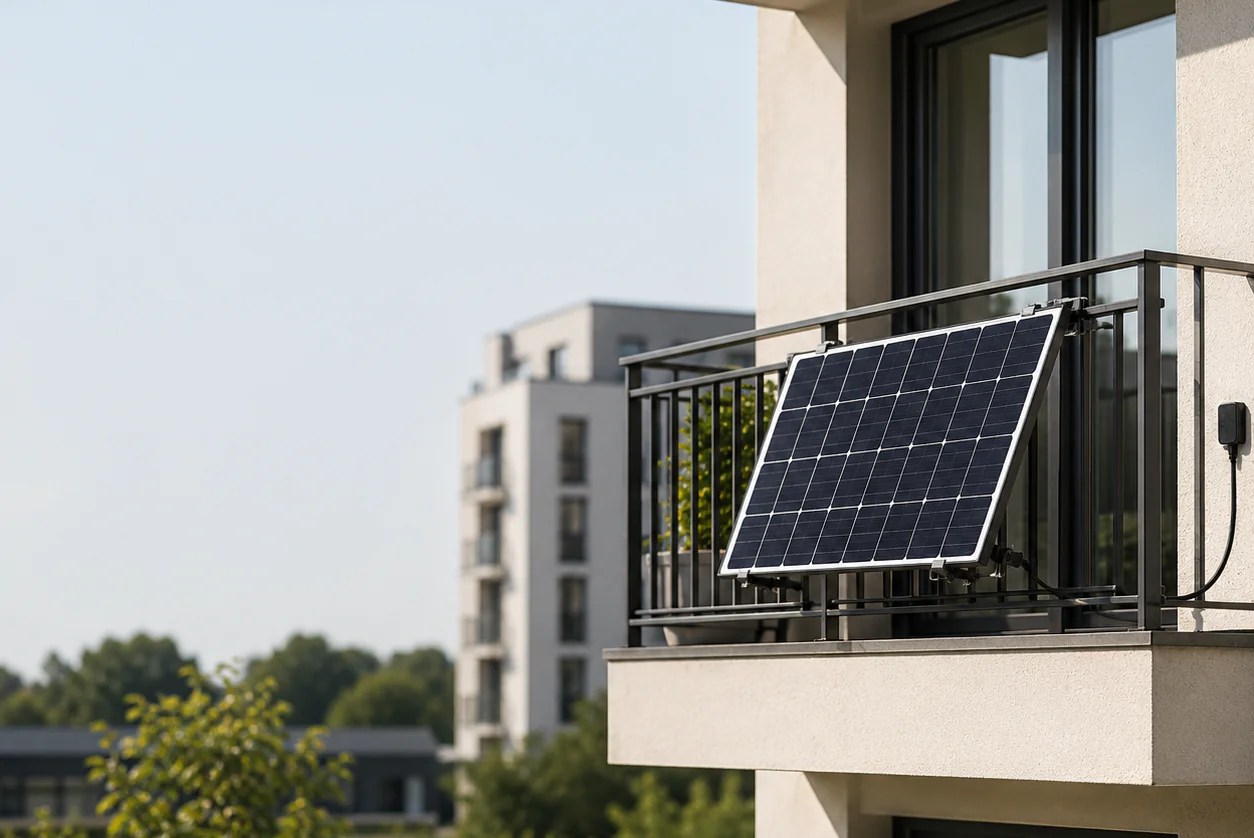
27 August 2026 marks an important development for solar in the UK, with regulatory changes creating a route for compliant plug-in solar products to be supplied and connected using a standard domestic socket.
Often referred to as balcony solar, these small photovoltaic systems are designed to generate electricity that can offset the power being used within a home at the time.
For homeowners, the concept may seem relatively straightforward.
For leasehold blocks, however, there is much more to consider.
Can residents simply install balcony solar?
Not necessarily.
A compliant product does not automatically mean that a particular installation is suitable for a particular building.
For managing agents and freeholders, a request to install plug-in solar may raise questions around:
- Lease terms and consent
- Electrical suitability
- Fire and structural considerations
- External walls and balconies
- Insurance and building-specific requirements
- Ongoing inspection and maintenance
The location and method of installation are also important. A removable or freestanding system may require a different approach from equipment fixed to a balustrade, façade or other part of the building.
Rather than adopting a blanket yes or no approach, managing agents should consider establishing a clear and proportionate process for assessing resident requests.
Safety doesn’t stop at installation
Plugging a system into a domestic socket may sound simple, but electrical safety is only one part of the picture.
The existing electrical installation, circuit, protective devices, socket location and manufacturer’s requirements may all need consideration.
For externally mounted equipment, there may also be questions around fixings, wind loading, structural suitability, fire performance, escape routes and the external wall system.
And the responsibility doesn’t necessarily end once permission has been granted.
Equipment can be moved, modified or damaged over time, which means appropriate record keeping, inspection and planned maintenance may become an important part of managing these installations.
What about the energy generated?
Plug-in solar is principally designed to offset electricity being consumed within the property while the panels are generating power.
Where generation exceeds consumption, things become more complicated.
In multi-occupancy buildings, metering and electrical arrangements can differ significantly from those of a conventional house. Residents should therefore not assume that surplus electricity will automatically qualify for an export payment.
The individual property’s electrical and metering arrangements need to be considered.
Balcony solar is the headline. But could the roof be the opportunity?
The arrival of plug-in solar also presents managing agents and building owners with an opportunity to look at the bigger picture.
Rather than considering solar only on a flat-by-flat basis, could a professionally designed block-level solar installation offer a better solution for the building?
Where technically and commercially suitable, communal solar could potentially supply landlord-controlled services such as:
Lighting | Lifts | Pumps | Ventilation | Other communal services
A block-level system can also provide a more structured approach, with defined ownership, one designed installation, planned maintenance arrangements and appropriate asset records.
It won’t be the right solution for every property, and the potential benefits need to be assessed and modelled for the individual building.
But when the first resident asks about putting solar on their balcony, it is worth asking a second question:
Could solar deliver greater benefit if we looked at the building as a whole?
What should managing agents do now?
The objective isn’t to make plug-in solar difficult.
It’s about making sure that, where it is introduced, it is done in a way that is safe, proportionate, documented and appropriate for the individual building.
Managing agents may want to consider reviewing their lease position, establishing a resident application process, assessing building and electrical suitability, setting appropriate conditions for approval and putting arrangements in place for ongoing records, inspection and maintenance.
How Future Decarbonise can help
Future Decarbonise can support managing agents and building owners in understanding the practical implications of solar within managed residential buildings.
Depending on the property and requirements, our support can include:
- Building and electrical suitability assessments
- Support with resident application frameworks
- Assessment of communal solar opportunities
- Design and installation of suitable block-level solar systems
- Planned preventative maintenance
Every building is different.
The arrival of plug-in solar is therefore less about simply saying yes or no to balcony panels, and more about having the right process in place to make an informed decision.
And for some buildings, the conversation may reveal that the bigger solar opportunity isn’t on the balcony at all.
It’s on the roof.
Want to understand the solar opportunity for your building? Get in touch with the Future Decarbonise team.
This article provides general information for property professionals and is not legal, electrical, fire, structural, building-safety or financial advice. Requirements and suitability will vary according to the individual building, lease, electrical installation, proposed product and method of installation. Appropriate competent professional advice should be obtained where required.